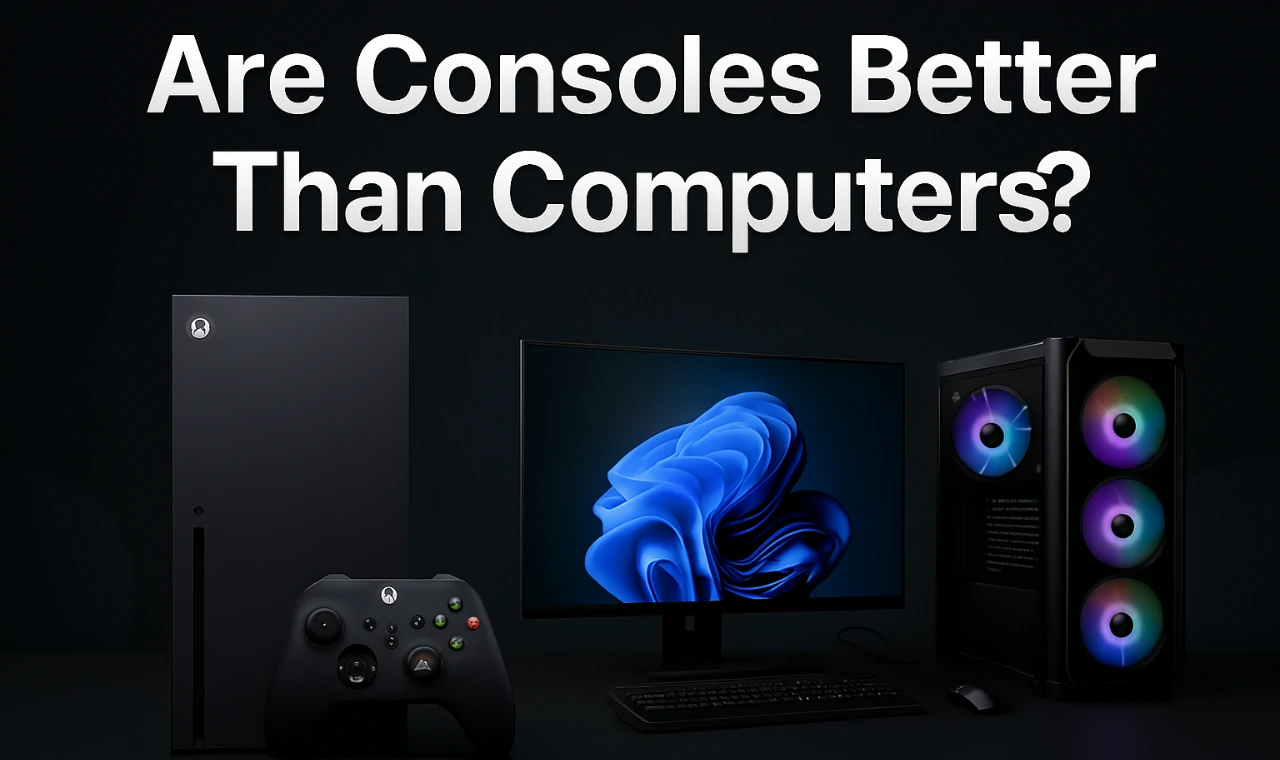
Are Consoles Better Than Computers? (Detailed Comparison)
It’s 2026, and gaming has hit a turning point. The new PlayStation 5 Pro, Nintendo Switch 2, and next-gen PCs are pushing boundaries so close that the gap between consoles and computers has almost vanished.
So, which setup gives you the best gaming experience?
Let’s walk through it together and see where you fit.
What’s Changed in 2026
The gaming world in 2026 feels nothing like it did a few years ago. Everything has moved fast and changed in ways no one expected.
PlayStation 5 Pro arrived with smart AI upscaling, faster ray tracing, and smooth 120Hz gameplay that brought console visuals closer to high-end PCs.
Nintendo answered with the Switch 2, finally giving handheld players the power and portability, they had always wanted.
Xbox kept building its ecosystem. Game Pass grew wider, and cloud access now works across consoles, computers, and even smart TVs.
On the PC side, hardware prices finally settled down. With NVIDIA’s RTX 5000 and AMD’s RDNA 4, top performance became affordable again. Cloud gaming has also matured. Services like GeForce Now, Luna, and Xbox Cloud Gaming now offer sharp 4K visuals without needing expensive gear.
Both sides have never looked stronger. Each one stands out in its own way, depending on what kind of gamer you are.
Understanding the Platforms
Before talking about specs and prices, it helps to remember what really separates the two worlds.
Consoles (PlayStation, Xbox, and Switch) focus on keeping things simple. They are ideal for players who want to play games with minimal setup or tweaks.
Gaming PCs tell a different story. They are open and flexible for people who like to build and personalize. A good rig can be a gaming beast one day and a creative workspace the next.
Price and Value
Let’s talk money first because most gamers start from this.
When it comes to consoles, they’re still the easiest way in. A PS5 Pro or Xbox Series X costs far less than building a gaming PC with similar performance. You get everything ready to use straight out of the box.
On top of that, subscriptions like Game Pass or PlayStation Plus open doors to hundreds of games for a small monthly fee. It feels like a sweet deal.
PCs offer freedom you can shape around your wallet. You might build a decent setup for eight hundred or go all out for a powerhouse that costs much more. PCs can get pricey with extras like monitors or keyboards, but they last longer since you can upgrade parts instead of replacing everything.
So yes, consoles win when you first pay. But over time, PCs quietly take the crown.
Performance and Graphics
Power is where things get interesting.
Modern consoles pack a serious punch. The PS5 Pro pushes sharp 4K visuals, and Xbox keeps frame rates smooth even in demanding titles. Since developers know the exact hardware they’re working with, they can squeeze every drop of performance from it. It’s why console games often look and run better than their specs suggest.
But PCs still sit on the throne when it comes to raw strength.
High-end GPUs like the RTX 5090 or RX 8900 XT can handle 8K gaming textures and blazing frame rates. You can fine-tune every detail from shadows to reflections until it looks perfect to your eyes.
In the end, PCs win on power. But consoles come surprisingly close for half the price, and that’s hard to ignore.
Visual Fidelity and Realism
It is not just about sharp resolution anymore. What matters now is how real and alive a game feels when you play it.
On a PC, you can adjust almost everything. You can adjust resolution and custom shaders that make the visuals look real.
Consoles take a different path but still look amazing. Features like PlayStation’s PSSR and Xbox’s smart scaling handle all the work for you. The system keeps the picture clean and balanced without asking you to change a thing.
Games and Ecosystems
Games are what make every system worth it.
PlayStation keeps the lead with deep story games like God of War Ragnarok, Spider-Man 2, and The Last of Us Part 3. These games pull you in and keep you there.
Nintendo stays true to fun and imagination with Zelda: Echoes of Time and Mario Odyssey 2. Xbox gives value through Game Pass, letting you explore a wide range of titles across platforms.
PC gamers have a world full of choice. There are massive open-world adventures to try. You can replay old classics or mod them into something completely fresh. Backward play support means you can enjoy games from decades ago without any limits.
In the end, consoles win through their exclusives, while PCs win through freedom and creativity.
Upgradability and Lifespan
Consoles stay the same for many years. You buy one, and it keeps working for about six or seven years. Sometimes a mid-generation model arrives with small improvements, but the core stays the same. Regular firmware updates help keep things running smoothly.
PCs are different. They grow with you. You can upgrade a graphics card, add more memory, or replace your storage whenever you want. It is like having a system that never really gets old as long as you take care of it.
We can say that consoles are easy and stable, while PCs are built to last through change.
Cloud Gaming and Connectivity
By 2026, cloud gaming will finally become a reality. It is no longer a rough idea. Services like GeForce Now, Xbox Cloud Gaming, and PlayStation Plus Premium now deliver high-quality visuals with almost no delay. You can stream games that once needed strong hardware and still get smooth play.
You can even sit back and play something like Cyberpunk 2077 on a smart TV or laptop without owning a console or a gaming PC.
The future of gaming sits somewhere in between. Cloud gaming has turned into one shared world where everything just works together.
Portability and Play Style
Mobility has become a big deal in gaming.
The Switch 2 still leads when it comes to playing at home or on the move. Even PlayStation’s Portal lets you take your favorite games anywhere with a steady internet connection. It makes gaming feel free again.
PCs are catching up. Handheld systems like the Steam Deck and ROG Ally bring desktop-level gaming to your hands. They cost more, but they show how powerful portable gaming can be.
Here, consoles win for easy travel, while PCs offer serious power in smaller shapes for players who want more control.
The Future of Gaming
The fight between console and PC is fading fast. It is no longer about one side winning. It is about connection.
AI is changing how games look and feel. Smarter enemies, adaptive worlds, and personalized stories are turning static games into living experiences. Whether you play on a phone, a laptop, or a console, the lines are gone. Everyone shares the same digital space now.
The future of gaming feels less divided and more connected than ever before.
Some Additional Factors to Consider
Here are some additional factors that also need to consider when compare consoles with computers. Let’s have an overview.
Energy Efficiency and Environmental Impact
Sustainability is no longer a side topic. It matters. New consoles run smarter, using less power without losing performance. PCs still draw more energy, especially when packed with high end parts. Cloud gaming sounds like a greener option, but that depends on how clean the data centers are.
Gamers have started paying attention to what their fun costs, not just in money but in energy too. The idea of responsible gaming now stretches beyond playtime.
Virtual and Augmented Reality
Immersive play keeps pushing forward. PCs still lead the way in VR with powerful headsets and endless tweaking options. PlayStation’s VR2 gives console players a strong taste of the experience, though its game library is smaller.
AR is also finding its footing. Smart glasses and mixed reality headsets are starting to blend with PC setups. It feels like we’re stepping into a future where games and real life overlap in new, exciting ways.
Game Ownership and Subscriptions
There are so many services now. Game Pass, PS Plus, GeForce Now, and a dozen others. It’s easy to forget what you actually own. Digital only consoles make that line even blurrier. PC players can spread across different stores, while console users often stay inside one ecosystem.
The convenience is great, but there’s a tradeoff. You don’t truly hold your games anymore — you borrow access to them. Still, for many players, that access is enough.
Accessibility and Inclusion
Modern gaming wants everyone to join in. Xbox continues to lead with its Adaptive Controller, and PC builders keep inventing creative tools like custom inputs and voice control. Cloud gaming adds another layer of freedom, letting players jump in without expensive gear.
The message feels stronger than ever. Gaming is not just for the few. It’s for everyone who loves to play.
Gaming Culture and Community
Gaming is no longer just about performance or graphics. It’s about people. PCs lead the esports scene with titles like Valorant and Dota, where competition rules. Consoles still own the living room, where friends share a couch and laughter fills the space.
Streamers, modders, and online groups keep PC culture alive and buzzing. Consoles hold onto that easy social energy that brings people together. Both sides keep gaming fun and full of life.
Security and Privacy
With everything online, safety matters more than ever. PCs let users control their own data and settings. Consoles keep it simpler but with more limits. Stronger logins, better parental tools, and smarter privacy options are becoming the norm.
Players are learning that protecting their digital space is just as important as mastering the game itself.
The Verdict
In 2026, there is not one clear winner. It all comes down to that fits your world, your budget, and your style.
Consoles still shine when it comes to easy setup, fair price, and those big exclusive games everyone talks about. On the other hand, PCs give you endless freedom to upgrade and personalize everything.
The best thing is gamers today have more ways to play and more powerful tech than ever before.